
VHS vs MiniDV vs Hi8: which format decays fastest?
If you've got a mixed box of formats, it helps to know which ones are most at risk, so you can prioritise what gets transferred first. Here's how the most common formats compare.
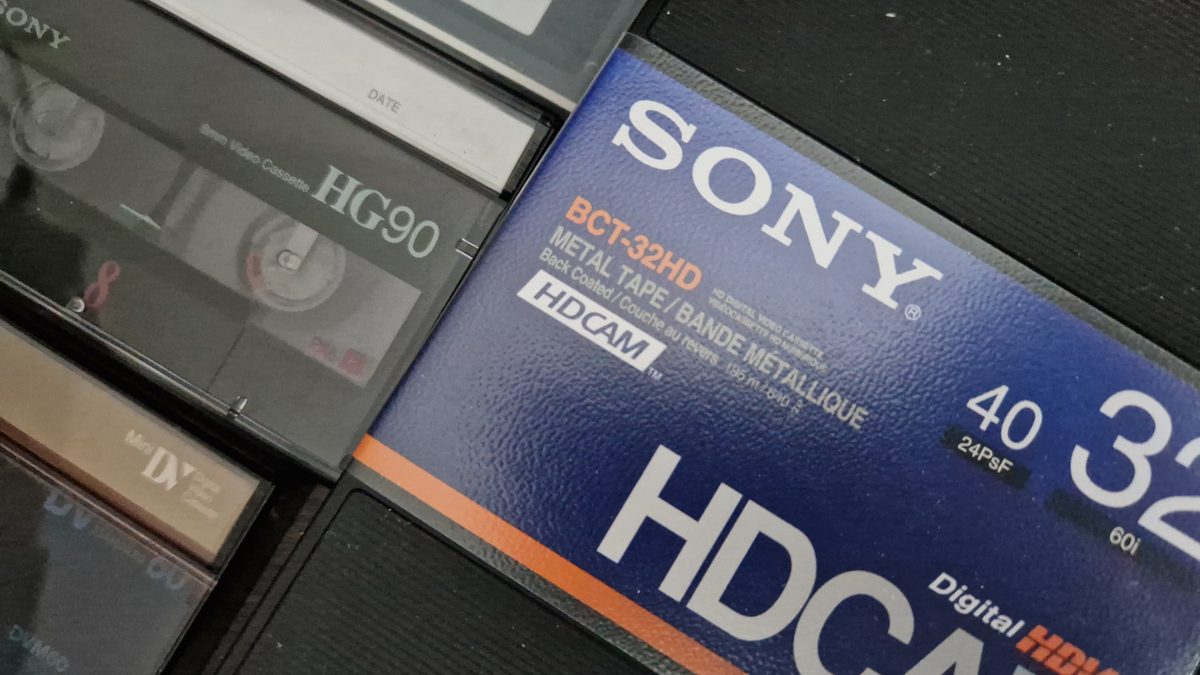
It depends more on the individual tape than the format alone.
Two tapes of the exact same format, bought at the same time, can age completely differently depending on the specific tape stock used, how they were stored, and how often they were played. That said, some general patterns hold true across formats, and they're useful for deciding what to prioritise if you've got a mixed collection.
How the common formats compare.
Betamax & early VHS
Tapes from the 1970s and early-to-mid 1980s carry the highest general risk of binder breakdown and sticky shed syndrome, simply due to their age and the tape formulations common at the time.
VHS, VHS-C & Video 8
Later VHS and Video 8 tapes from the late 1980s and 1990s are generally more stable, though quality and condition still vary a lot by manufacturer and storage history.
Hi8 & Digital 8
Physically smaller, thinner tape than full-size VHS, which can make these cassettes more delicate to handle and play back, even where the recording itself has aged well.
MiniDV
As a digital format, MiniDV doesn't suffer the same generational picture quality loss as analogue tape, but is more prone to mechanical issues like tape shedding, dropout, and connector or drum wear.
MicroMV
A short-lived format with increasingly scarce working playback equipment. The tape itself may be fine, but finding a deck that still plays it reliably is the bigger long-term risk.
Professional & broadcast tape
Betacam, DVCAM, HDCAM and similar formats span decades of manufacture, so risk varies enormously by specific tape stock and age — some 1980s Betacam tape is at real risk, while later Digital Betacam is often more stable.
If you can only transfer some tapes first, start here.
Most people don't digitise their whole collection in one go, and that's fine. If you need to prioritise, this is the order we'd suggest:
Suggested priority order
- 1. Anything showing symptomsSquealing, jamming, or a musty smell — see our sticky shed syndrome guide.
- 2. Your oldest analogue tapesBetamax and early-to-mid 1980s VHS first.
- 3. Anything stored poorlyLofts, garages, sheds or damp areas.
- 4. Rare or hard-to-play formatsMicroMV and similar, where equipment is scarce.
- 5. Everything elseWell-stored later VHS, MiniDV and digital formats carry comparatively less urgency.